
Transforming expensive pilots into quantifiable profit engines in the era of enterprise-scale intelligence.
A new February 2026 report reveals only 12% of organizations truly achieve AI-driven operations. For the rest, expensive pilots languish. This is not about more investment; it’s about smarter measurement.
In 2026, we stand at a curious crossroads with enterprise AI. Despite vast investments, a striking truth persists: a recent Thoughtworks and IDC report reveals only 12% of organizations truly achieve AI-driven operations. This isn’t a story of technical failure, but often one of strategic disconnect. We must look ‘Beyond the 12%’ to uncover the data-driven blueprint that guarantees AI value capture, moving from hopeful pilots to undeniable profit.
This post will equip Fortune 500 CTOs with the precise, data-backed strategies and key performance indicators (KPIs) that differentiate the top 12% of AI value capturers. Learn how to transition from fragmented pilots to quantifiable business outcomes, leveraging critical metrics like ‘cycle time,’ ‘cost per transaction,’ and ‘revenue per rep’ to prove and scale AI’s impact.
Why This Matters: The Urgency for Quantifiable AI Value
For Chief Technology Officers within Fortune 500 manufacturing companies, the stakes of AI adoption are immense. We are navigating an era where agile, tech-forward competitors are disrupting traditional industries with superior digital products and experiences, a trend keenly observed in discussions about digital manufacturing in 2026.
Yet, the disheartening statistics paint a challenging picture. While traditional technology adoption once had a failure rate of approximately 42%, the addition of digital, data, or AI to the mix often doubles these rates. Some analyses even suggest that as high as 88% of enterprise AI initiatives fail to deliver substantial value.
The disconnect often lies not in the potential of AI itself, but in the journey from initial proof-of-concept to systemic, measurable enterprise AI value capture.
The Blueprint for Guaranteed AI Value Capture
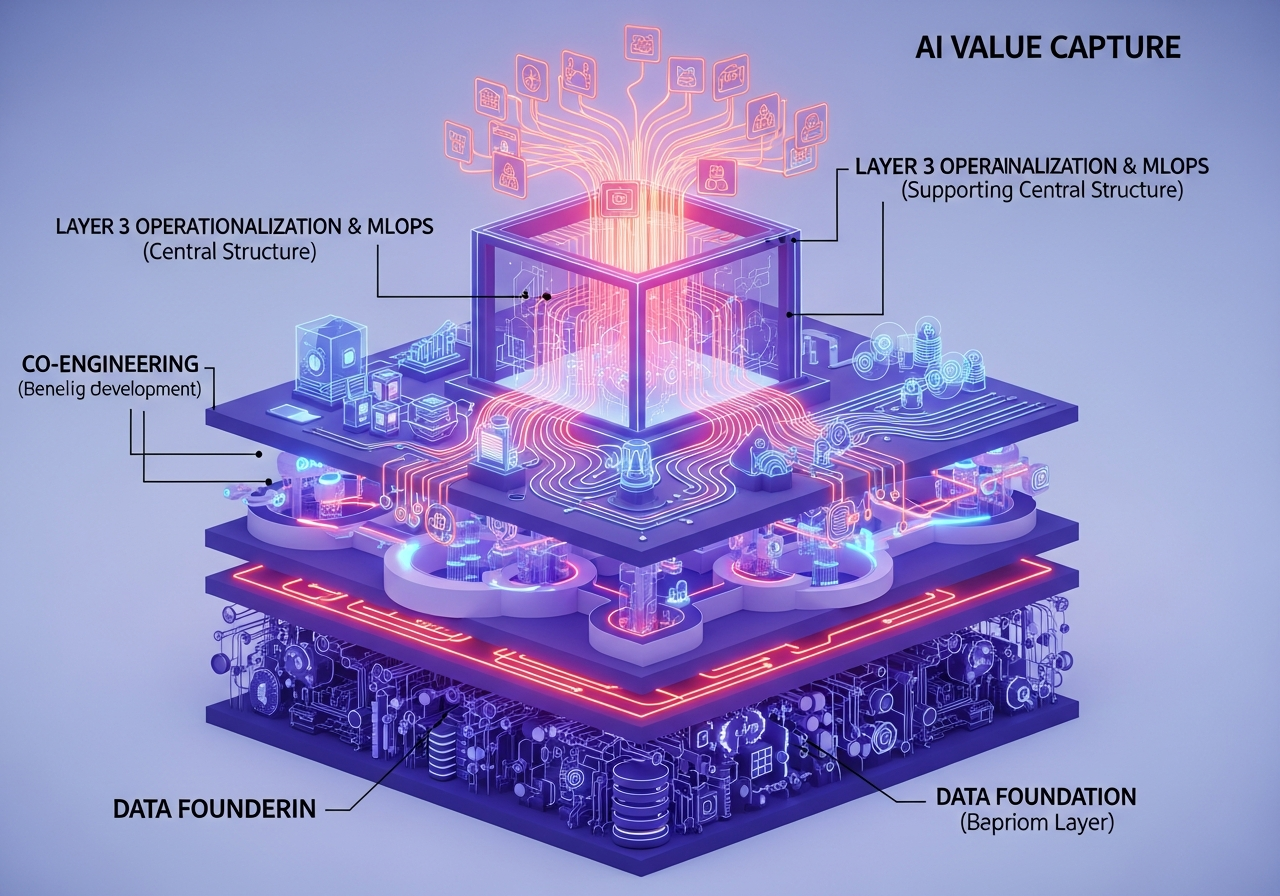
The transition from AI aspiration to operational reality demands more than just technology; it requires a strategic framework that aligns innovation with tangible business impact.
1. Strategic Alignment: Beyond the Pilot Phase
Visionary CTOs embed AI within the overarching business strategy from inception. This means identifying pain points where AI acts as a force multiplier across entire value chains, not just within individual departments.
Consider the breakthrough of a manufacturing giant that integrated predictive maintenance AI directly into supply chain optimization. This systemic re-envisioning, supported by Simform’s expertise in digital product engineering, ensures AI solutions are designed for ecosystem integration from day one.
2. The Data Foundation: The Unsung Hero
AI models are only as effective as the data they consume. Leading organizations invest proactively in robust data engineering to ensure:
- Data Integration: Breaking down silos for a unified view.
- Governance: Ensuring accuracy and compliance.
- AI-Ready Pipelines: Automated raw-to-ML transformations.
3. The Co-Engineering Imperative
As Nick Colisto, SVP and CIO at Avery Dennison Corporation, advises, “aim to buy about 80% of the capabilities you need and build the remaining 20%… don’t reinvent what’s already working elsewhere.” Embracing a Co-Engineering & Innovation Lab model allows internal teams to converge with specialized external experts to shorten development cycles.
Expert Insight: Precise Metrics for AI Value Capture
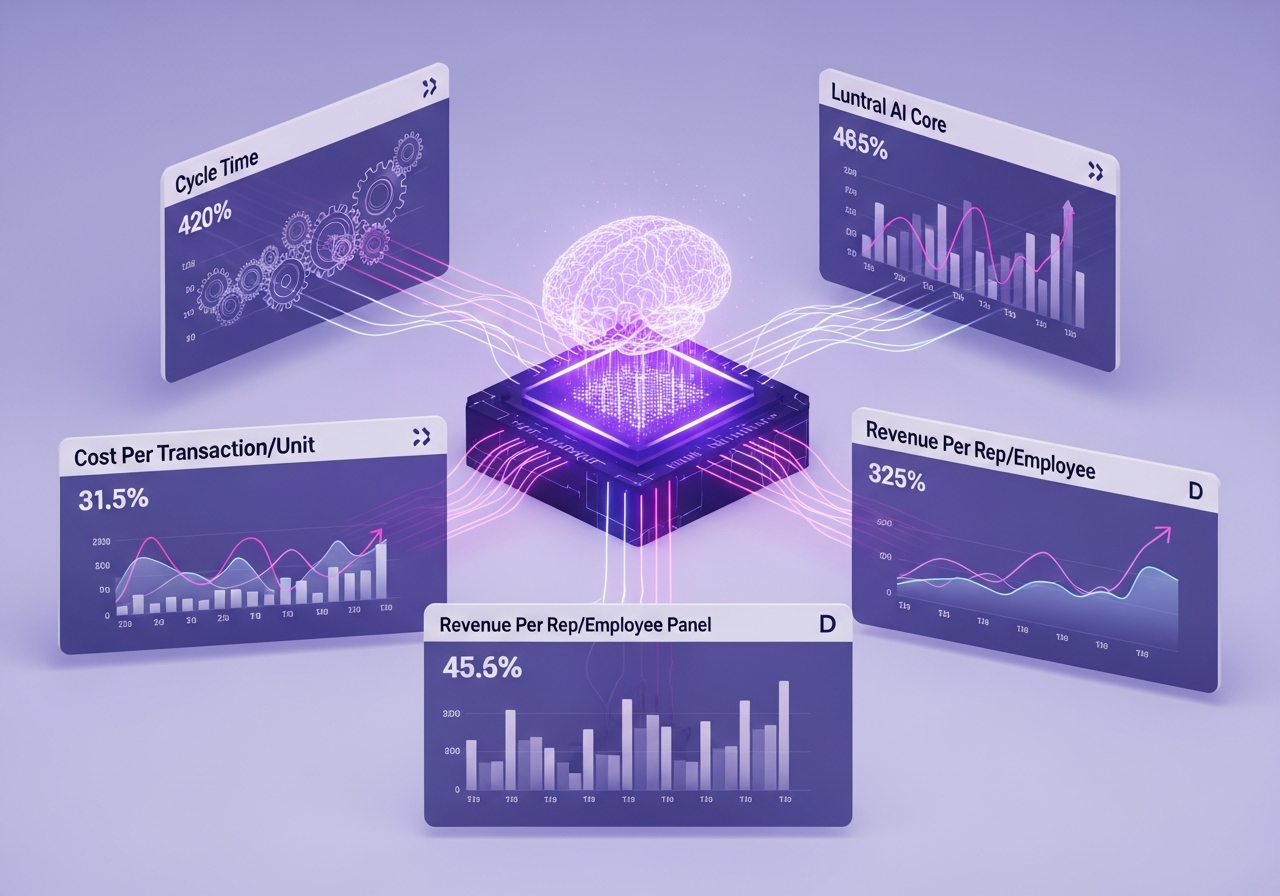
1. Redefining Success: Business KPIs Over Vanity Metrics
Cycle Time
Reducing the time from raw material input to finished product. proprietary models at Ford can now simulate aerodynamic drag in seconds vs. 18 hours.
Cost Per Unit
Decreasing expenditure per produced item through AI-driven process optimization and predictive maintenance.
Revenue Per Rep
Enhancing productivity by streamlining tasks with AI assistants, allowing experts to focus on high-value decision making.
“Our ‘AI Big Bets’ all have stringent financial analysis, and already have outsized value. But our success metrics aren’t just financial. We also look at agility and speed.” — Franziska Bell, Chief Data and AI Officer at Ford Motor Company.
2. A Phased Approach to ROI
Adopt a framework where early experimentation is encouraged, but pathways to value are non-negotiable:
Stage 1: Experimentation & PoC
Focus on technical feasibility and initial problem validation. Use this phase to identify which “Big Bets” have the potential for enterprise-wide scaling.
Stage 2: Pilot & Measurement
Introduce initial KPIs like cycle time reduction in a specific process to build the internal business case.
Stage 3: Scale & Enterprise Integration
Apply stringent ROI analysis. Leverage Simform’s managed sustenance services to maintain and evolve these assets for long-term returns.
Conclusion: Orchestrating AI for Undeniable Profit
The narrative of enterprise AI in 2026 is being written by those who move beyond isolated successes. By laying robust data foundations, balancing build vs. buy via co-engineering, and measuring impact with surgical precision, Fortune 500 leaders are turning AI from a cost center into a strategic advantage.
Ready to move beyond the 12%? Implementing robust MLOps and Cloud engineering is the final step in transforming your AI vision into a continuously evolving, value-generating asset.
Leave a Reply